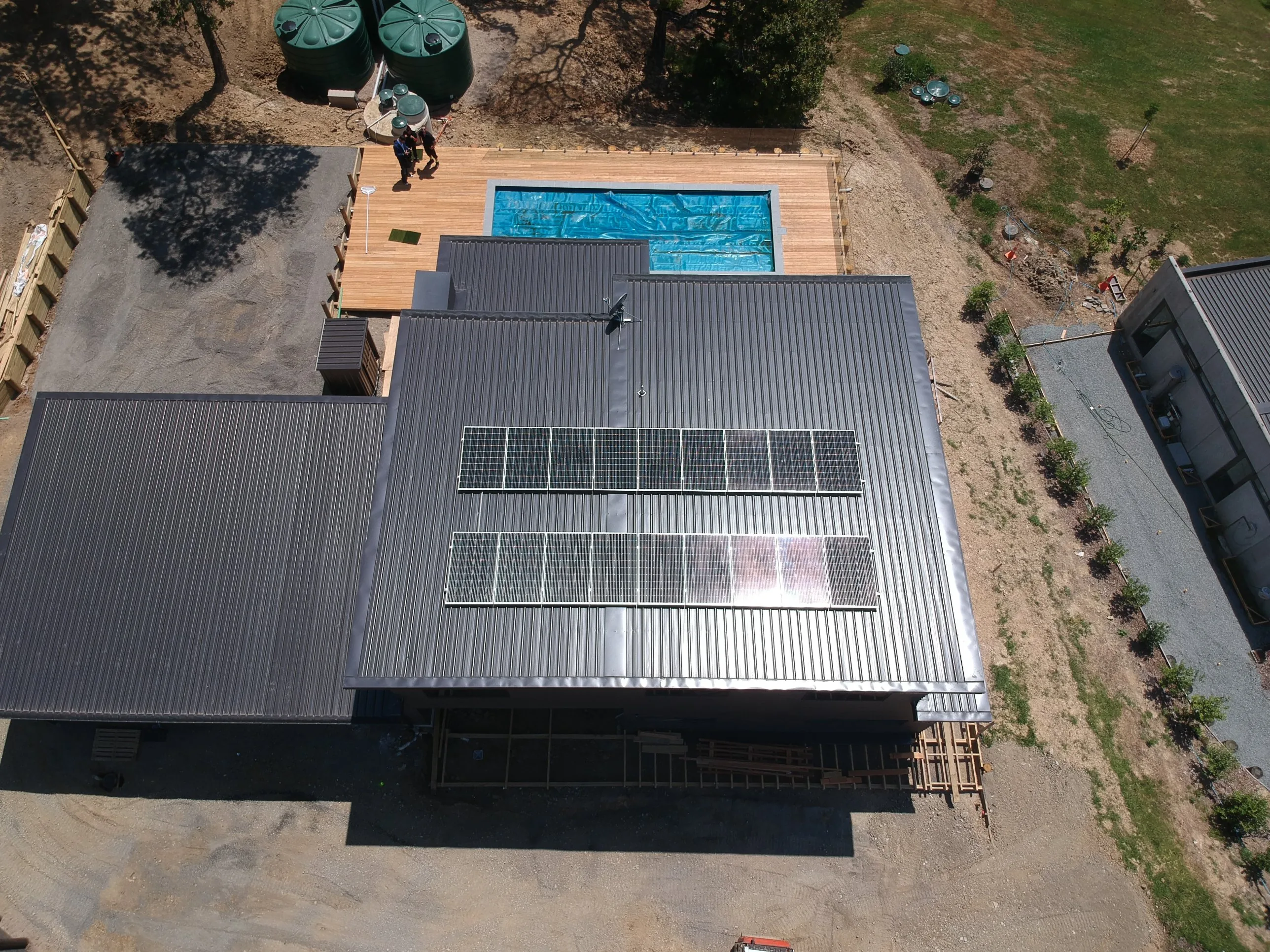
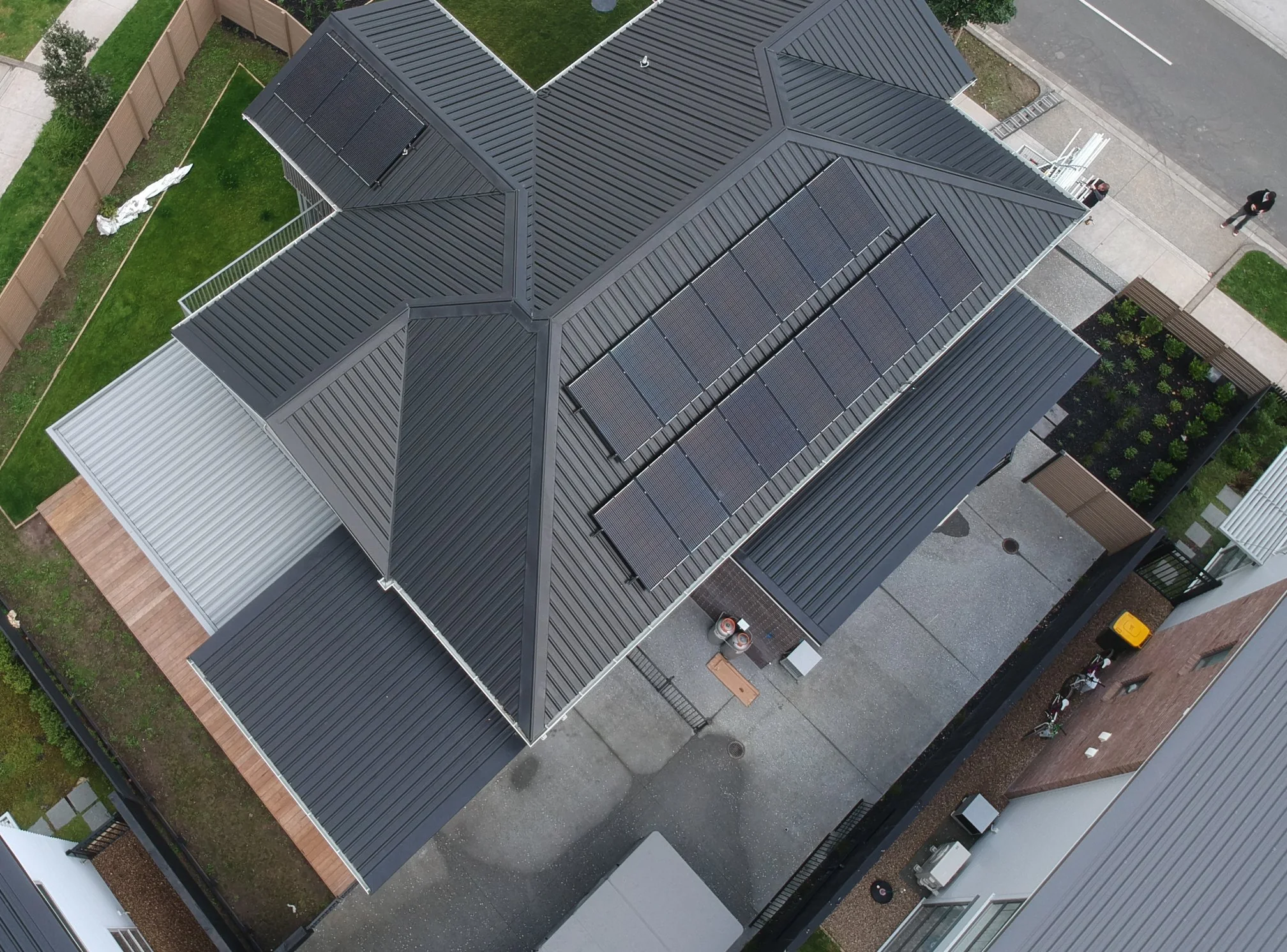
Solar energy converts direct sunlight into clean, usable electricity for your property through a clear and straightforward process:
DC from panelsAC for home & batteryExport to grid
1
Starts with SunlightWhen the sun rises, solar panels installed on your roof capture light energy and turn it into Direct Current (DC) electricity.Light → DC
2
Conversion to Usable PowerA solid-state power inverter transforms this DC electricity into standard 240V Alternating Current (AC) electricity, which is the exact power format used by everyday appliances.DC → AC
3
Driving Your HomeThe converted AC power flows directly into your switchboard to run active appliances such as refrigerators, heat pumps, lighting and computers first, before drawing any extra power from the utility grid.AC
4
Exporting & StoringAny surplus power your panels produce during the day can be stored in a battery bank for night-time use or exported back to the main power grid to earn credits on your power bill.Storage · Export
Solar as an investment
Installing solar delivers a direct financial return on investment by immediately replacing expensive retail electricity with self-generated power.
Investment Payback: Depending on your daily energy consumption and current power company tariffs, a modern solar system can pay for itself in as little as 5 years.
Mitigate Against Rising Costs: Retail power prices in New Zealand increase by an average of 7% per year. Generating your own solar energy protects your household budget against future energy price hikes.
Higher Yields Than Bank Deposits: Over a 7-year period, the savings generated by an 8kW solar setup with battery storage can yield up to 6 times more value than placing that same money in a standard bank term deposit account.
Money saving calculator
Our Solar Saving Calculator evaluates your property's financial savings based on three core inputs:
Average Monthly Power Bill: Determines your baseline energy demand and current retail electricity expenditure.
Daytime vs. Evening Usage Profile: Estimates how much solar power you will use live versus how much surplus can be stored in a battery or exported to the grid.
Roof Size & Sun Exposure: Calculates your total rooftop solar generation potential based on orientation and seasonal sunlight.
How much of your power you use while the sun is up.
Illustrative only. Your free consultation gives exact figures for your property.
Sample solar saving calculation
Average current monthly bill$300 / month
Estimated bill reduction (80%)−$240 / month
Monthly green loan repayment+$170 / month
Net monthly cash pocketed+$70 to $130 / month net savings
(Based on an 8kW solar array paired with battery storage financed via low-interest green loans.)
Understanding your investment
A solar system is one of the few investments that begins reducing your costs from the day it is commissioned. While every property is different, the biggest factor affecting your return is when you use your electricity.
Based on recent Solar Shop proposals and current New Zealand market data, customers can typically expect the following payback periods:
System type
Typical payback
Typical range (±10%)
Residential Solar
6 Years
5.5–6.5 Years
Commercial Solar
5–7 Years
4.5–7.5 Years
Farm Solar
4–7 Years
3.5–7.5 Years
Solar with Battery Storage
9–10 Years
8–11 Years
These figures align closely with the wider New Zealand solar market, with actual results depending on electricity usage, system design and future electricity prices.
Maximise your savings
The best financial returns come from using your solar energy while it is being generated, rather than exporting excess power back to the grid.
Residential Homes
Simple changes can significantly improve your savings by increasing daytime energy use, including:
Running dishwashers, washing machines and dryers during the day.
Heating hot water while the sun is shining.
Charging electric vehicles during daylight hours.
Running pool pumps, irrigation and other high-load appliances during the day.
Pre-heating or cooling your home before evening peak periods.
These changes can improve self-consumption by 10–30%, reducing your payback period without any additional investment.
Commercial Businesses
Commercial properties often achieve the fastest payback because most electricity is used during normal working hours when solar production is highest. Offices, workshops, warehouses, factories, refrigeration, HVAC systems and manufacturing equipment naturally consume power throughout the day, allowing businesses to maximise the value of every kilowatt-hour generated.
Dairy Farms
Solar is an excellent fit for dairy farms, where many of the largest electrical loads occur during daylight hours. Milking equipment, milk cooling, vacuum pumps, hot water, wash-down systems, irrigation, water pumps and workshops all align well with solar production. Combined with the large roof areas typically available on dairy sheds, this often results in some of the strongest financial returns in the industry.
Schools
Schools are also ideally suited to solar, with classrooms, administration, technology rooms, ventilation, heat pumps and lighting operating throughout the school day. This high daytime demand means schools consume much of the electricity they generate, reducing operating costs while providing an excellent opportunity to demonstrate sustainability and renewable energy to students.
Your electricity retailer matters
Your choice of electricity retailer can have a significant impact on the overall value of your solar investment.
Electricity retailers offer different buy-back rates for the excess electricity you export to the grid, along with different daily charges, import tariffs and pricing structures. The right retailer for one customer may not be the best choice for another.
For example:
Homes with lower daytime usage may benefit from retailers offering higher export (buy-back) rates.
Businesses that use most of their solar generation during the day often benefit more from lower import tariffs than higher export rates.
Farms with large daytime electrical loads typically maximise self-consumption, making system sizing and electricity pricing more important than export payments.
As your electricity usage changes over time, whether through an electric vehicle, battery storage, new equipment or business growth, your ideal electricity plan may also change.
At Solar Shop, we're happy to help you review your electricity plan both before and after installation to ensure you're getting the maximum return from your solar investment.
The Solar Shop Difference
At Solar Shop, we believe the best system is not necessarily the biggest; it is the one that delivers the greatest return on your investment.
Rather than simply filling every available roof with panels, we design each system around how and when you use electricity, ensuring the system is correctly sized to maximise self-consumption, reduce grid reliance and deliver the strongest long-term financial outcome.
From selecting the right system size to advising on battery storage and even helping you choose the most suitable electricity retailer, our goal is simple:
Design the right system the first time, maximise every unit of energy you produce, and help you achieve reliable savings for the next 30 years and beyond.
Choosing the right electricity retailer
Choosing the right electricity retailer can have a significant impact on varying daily charges, import tariffs and pricing structures. The best option depends on how much electricity you use during the day, how large your solar system is, and whether your property is residential, commercial or rural.
As a general guide (correct at the time of writing):
If your solar system is intentionally oversized and you expect to export a large amount of electricity back to the grid, retailers offering competitive buy-back rates, such as Meridian, Ecotricity, Octopus Energy and Z Energy, may provide greater value.
If your system is designed to offset most of your own electricity usage, rather than exporting large amounts, retailers with competitive import pricing, such as Mercury and Contact, may provide a better overall outcome.
These examples are intended as a general guide only. Electricity plans, buy-back rates and pricing structures change regularly and can vary between regions throughout New Zealand. We recommend reviewing the latest plans available in your area before making a decision.
At Solar Shop, we're happy to discuss your expected usage profile and help point you towards a retailer that best suits your system and energy requirements.
Ongoing monitoring & support
Your relationship with Solar Shop doesn't end once your system is installed.
Every system includes remote monitoring, allowing both you and our team to monitor your solar production and overall system performance. In many cases, if your system develops a fault, we'll receive an alert before you even notice a problem.
This allows us to contact you promptly and arrange any required service, minimising downtime and ensuring your system continues performing as expected.
Remote monitoring also allows us to:
Verify your system is generating the expected energy.
Identify faults quickly and efficiently.
Monitor long-term system performance.
Help determine when a panel clean or maintenance inspection may improve output.
Provide advice if your electricity usage changes, such as adding an EV charger, spa pool or heat pump.
If you ever have any questions about your system or feel it isn't performing as expected, simply give our team a call. We're always happy to review your monitoring data and ensure your solar investment continues delivering the maximum possible return.
Green loans & finance options
Financing your solar installation can make clean energy accessible from day one without large out-of-pocket expenses:
Low-Interest Green Home Loans
Most major New Zealand banks (including Westpac, ANZ, BNZ, ASB and Kiwibank) offer specialised 0% or low-interest green loan top-ups specifically for home sustainability upgrades like solar and batteries.
Immediate Positive Cash Flow
When you finance a solar-plus-battery system through a mortgage add-on, your monthly power bill savings often exceed your new loan repayment amount from month one, putting extra cash back into your household budget immediately.